From March 17, 2015, that's "Trustful Hillary." C.I. noted:
Hillary waves and smiles to a crowd, declaring,
"Trust me." Behind her back, she has her fingers crossed. Isaiah
archives his comics at The World Today Just Nuts.
That's the Hillary we know and distrust. She earned that reputation long, long ago.
Here's C.I.'s "Iraq snapshot:"
Friday, June 8, 2018. Congress needs to ask the Defense Dept how they
rate US tax dollars when they can't even show up for a hearing on burn
pits?
Where is the US Defense Dept? Or rather, where was it?
US House Rep Beto O'Rourke: I'm just really disappointed -- the Chairman of the Subcommittee already said this, but I join him in saying just how disappointed I am that Department of Defense ducked this meeting. They have every reason in the world to be here -- deeply disappointing that they're not.
He was speaking at Thursday afternoon's House Veterans Affairs Committee hearing -- a hearing the Defense Dept decided wasn't important enough for them to be present.
The view was a common one. US House Rep Clay Higgins, for example, stated, "I'd like to state for all present that it is quite disturbing that DoD is not present." In what world is DoD allowed to sit out the hearing? And we thought the VA's former Alison Hickey was the worst veterans would have to suffer through?
Higgins continued, "I'm quite disturbed that DoD isn't here because I'd like to ask who the genius was that came up with this idea? We've essentially -- we've essentially deployed chemical and biological weapons on our own troops."
How so? The topic was burn pits.
"I will say that I'm disappointed that the representatives of DoD chose not to participate today. This is currently the only planned panel on this subject," observed US House Rep Neal Dunn. "Their statement is available for the record; however, as a potential key contributor in what needs to be ongoing research into this problem, their presence would have been valuable."
But they weren't there. The American people pay DoD's salaries. What's the justification for the Dept of Defense failing to send a single representative to the hearing?
As many members of the Committee noted in the hearing, it had taken years for the government to address Agent Orange and its victims from the Vietnam War.
In fact, as Beto O'Rourke noted, "it took this country more than 40 years to acknowledge our responsibility and our accountability and to pony up and begin to take care of people that we should have decades earlier been there for."
When DoD doesn't even feel the need to show up at a hearing on burn pits, it makes it appear highly unlikely that they feel any real pressure to address this serious issue that is not only causing the suffering of many veterans but is also claiming the lives of many veterans.
Do they not even care?
And do they not even care about offering the pretense that they care?
DoD looks very bad.
And that's before you factor in the US Government Accountability Office issuing a report yesterday entitled "DOD Needs to Fully Assess the Health Risks of Burn Pits." Here's the summary of the report:
While DOD has guidance that applies to burn pit emissions among other health hazards, DOD had not fully assessed the health risks of use of burn pits, according to DOD officials.
According to DOD officials, DOD's ability to assess these risks was limited by a lack of adequate information on (1) the levels of exposure to burn pit emissions and (2) the health impacts these exposures had on individuals. With respect to information on exposure levels, DOD had not collected data from emissions or monitored exposures from burn pits as required by its own guidance. Given the potential use of burn pits near installations and during future contingency operations, establishing processes to monitor burn pit emissions for unacceptable exposures would better position DOD and combatant commanders to collect data that could help assess exposure to risks.
GAO recommended that the Secretary of Defense (1) take steps to ensure CENTCOM and other geographic combatant commands, as appropriate, establish processes to consistently monitor burn pit emissions for unacceptable exposures; and (2) in coordination with the Secretary of Veterans Affairs, specifically examine the relationship between direct, individual, burn pit exposure and potential long-term health-related issues. DOD concurred with the first recommendation and partially concurred with the second. In a May 2018 status update regarding these recommendations, DOD outlined a series of steps it had implemented as well as steps that it intends to implement. The department believes these efforts will further enhance its ability to better monitor burn-pit emissions and examine the relationship between direct, individual, burn pit exposure and potential long-term health related issues. GAO believes the steps DOD is taking are appropriate.
This statement provides information on the extent to which DOD has assessed any health risks of burn pit use.
This statement is based on a GAO report issued in September 2016 (GAO-16-781). The report was conducted in response to section 313 of the Carl Levin and Howard P. “Buck” McKeon National Defense Authorization Act for Fiscal Year 2015. Specifically, GAO assessed the methodology DOD used in conducting a review of the compliance of the military departments and combatant commands with DOD instructions governing the use of burn pits in contingency operations and the adequacy of a DOD report for the defense committees. GAO also obtained updates from DOD on actions taken to assess health risks from burn pits since September 2016.
For more information, contact Cary Russell at (202) 512-5431 or russellc@gao.gov.
US House Rep Julia Brownley was another member of the Committee expressing dismay over the decision by the Defense Dept not to participate in the hearing. She noted the DoD would need to work with the VA on this issue and "that is why it is both unfortunate and disappointing, as the Chairman said, that the agency who will need to be a true partner is unwilling to participate."
They're unwilling to participate, the Defense Dept, even as the GAO finds the Department lacking in basically every duty that has to do with the issue of burn pits.
Time permitting, we'll note Brownley and US House Rep Mark Takano next week on an aspect that includes burn pits but also goes beyond it.
For now, we'll note this exchange from the hearing.
US House Rep Beto O'Rourke: What I want to know from you is how have they [DoD] been as a partner? Your title is Chief Consultant Post Deployment, Health Office of Patient Care Services Veterans Health Administration US Dept of Veterans Affairs. So you're post deployment. How are you doing with working with the deployment side of the equation?
as to the point as you can be.
Ralph Erickson: Again, we have a deployment health work group which we on a regular basis work to discuss these issues --
US House Rep Beto O'Rourke: So let me get to this. You have 144,000 on the voluntary registry out of 3.5 eligible. Is DoD doing everything within their power to identify those 3.5 million and connect you with them?
Ralph Erickson: Representative O'Rourke, I-I cannot speak for DoD in that regard --
US House Rep Beto O'Rourke: I'm asking you.
Ralph Erickson: My-my sense is they have taken very strong steps to that end -- especially as it relates to point of transition --
US House Rep Beto O'Rourke: Is there something more that they could do?
Ralph Erickson: You know -- you know, I think all of us could partner better to do more. My sense is that, uh, with having, uh, a much greater enrollment in the registry we'll be able to take this much further than we have to date.
US House Rep Beto O'Rourke: Let me ask you this question, so the Chairman -- Chairman Roe -- referred to his desire to study medical cannibas and while I support that effort I also support allowing doctors at the VA to prescribe it today just because there are doctors who would like to prescribe it today, there are veterans who would like to receive it and, if those two agree, then let's move forward. I don't need to study it anymore. Are we at a point now where doctors can begin treating this without more studies? And where we can -- We have enough information even if it's not, you know, studied to the tenth degree. But there are veterans who are saying "I am experiencing this and need this help" and enough doctors who are saying, "I can do the following to help those veterans and here are the kind of unique conditions that we can respond to.''
Ralph Erickson: To the degree that a service member or a veteran has a defined condition -- bronchitis, a type of cancer, etc. -- we certainly will aggressively pursue the normal methods of treatment to the state of the art. As it relates to answering all of the questions that are surrounding this from exposure, there's a lot we still need to learn. And we're in that phase right now where we know there's an issue but we don't have all the answers.
US House Rep Beto O'Rourke: Could we get to -- could we get to the presumptive status akin to Agent Orange where you just say, "Look, I was here in Iraq -- or Afghanistan -- at this time and I can't tell you how many kilometers away from the burn pit I was or the date or exactly what was burned, but I was experiencing this. Help me." and the VA's going to help you?
Ralph Erickson: With Agent Orange, presumptions came into effect both with legistlation which specified which diseases and which presumptions --
US House Rep Beto O'Rourke: Are you waiting on us to do that?
Ralph Erickson: No.
US House Rep Beto O'Rourke: Do you need that statutorily or can you --
Ralph Erickson: Or that --
US House Rep Beto O'Rourke: -- deliver that care?
Ralph Erickson: -- VA would -- the Secretary would have the authority through the authority that the Congress has provided the Secretary to say that the-the level of evidence is sufficient for us to make a presumption. At the present time, we don't have sufficient evidence.
US House Rep Beto O'Rourke: Even if the veteran says "I was here, I experienced this and there were at least 150,000 other people who had taken the time to register that same complaint," we just don't have enough?
Ralph Erickson: We-we-we need those answers. We need those studies I mentioned, we need those to go to completion, we need to be able to work on a population.
US House Rep Beto O'Rourke: Last question because I'm out of time, what's the time line to have those studies done?
Ralph Erickson: Uh, again, I'll-I'll provide that to you, that'll be one of my takeaways.
US House Rep Beto O'Rourke: Give me the ballpark.
Ralph Erickson: These-these can take several years.
US House Rep Beto O'Rourke: So at the earliest, three years from today?
Ralph Erickson: That is a possibility but it will vary study to study.
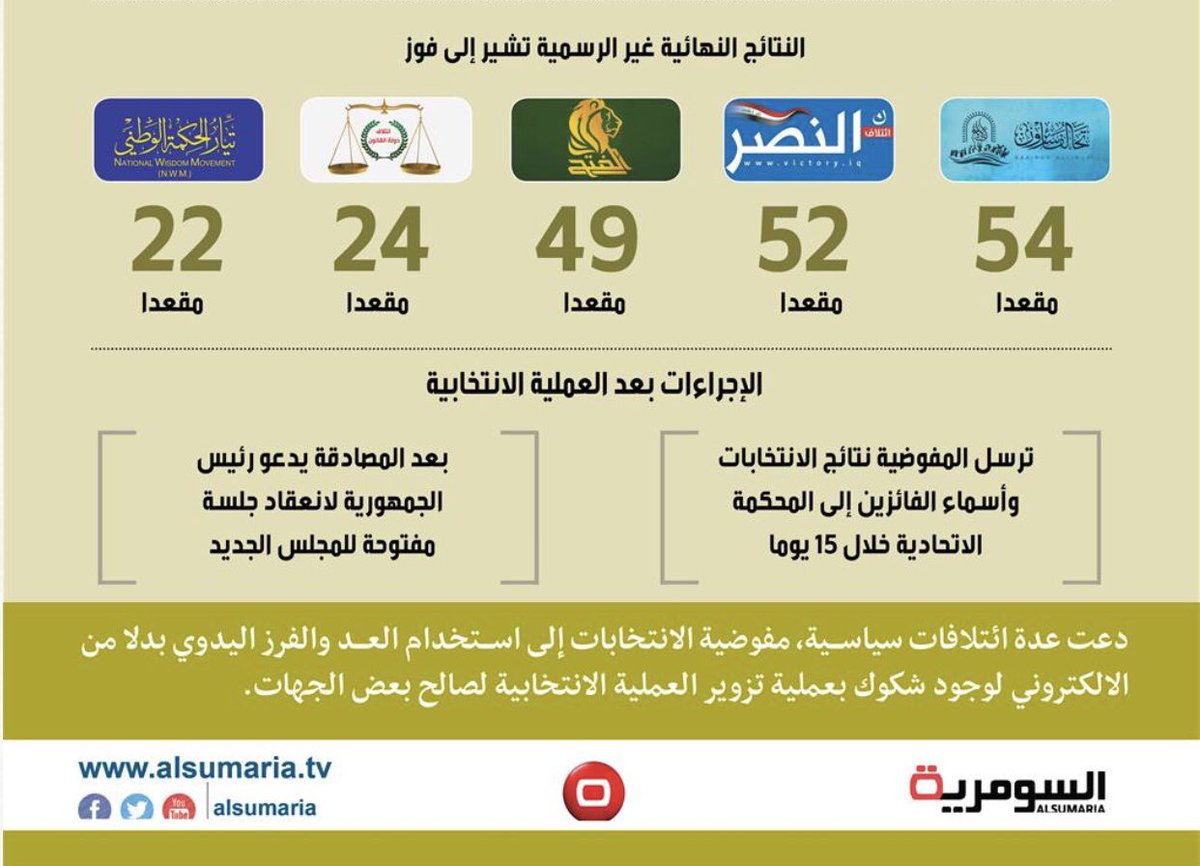
Ballots are being studied in Iraq. That's after the May 12th election results didn't please those already in power. So the results are now cancelled. Some reactions on Twitter.
Where is the US Defense Dept? Or rather, where was it?
US House Rep Beto O'Rourke: I'm just really disappointed -- the Chairman of the Subcommittee already said this, but I join him in saying just how disappointed I am that Department of Defense ducked this meeting. They have every reason in the world to be here -- deeply disappointing that they're not.
He was speaking at Thursday afternoon's House Veterans Affairs Committee hearing -- a hearing the Defense Dept decided wasn't important enough for them to be present.
The view was a common one. US House Rep Clay Higgins, for example, stated, "I'd like to state for all present that it is quite disturbing that DoD is not present." In what world is DoD allowed to sit out the hearing? And we thought the VA's former Alison Hickey was the worst veterans would have to suffer through?
Higgins continued, "I'm quite disturbed that DoD isn't here because I'd like to ask who the genius was that came up with this idea? We've essentially -- we've essentially deployed chemical and biological weapons on our own troops."
How so? The topic was burn pits.
"I will say that I'm disappointed that the representatives of DoD chose not to participate today. This is currently the only planned panel on this subject," observed US House Rep Neal Dunn. "Their statement is available for the record; however, as a potential key contributor in what needs to be ongoing research into this problem, their presence would have been valuable."
But they weren't there. The American people pay DoD's salaries. What's the justification for the Dept of Defense failing to send a single representative to the hearing?
As many members of the Committee noted in the hearing, it had taken years for the government to address Agent Orange and its victims from the Vietnam War.
In fact, as Beto O'Rourke noted, "it took this country more than 40 years to acknowledge our responsibility and our accountability and to pony up and begin to take care of people that we should have decades earlier been there for."
When DoD doesn't even feel the need to show up at a hearing on burn pits, it makes it appear highly unlikely that they feel any real pressure to address this serious issue that is not only causing the suffering of many veterans but is also claiming the lives of many veterans.
Do they not even care?
And do they not even care about offering the pretense that they care?
DoD looks very bad.
And that's before you factor in the US Government Accountability Office issuing a report yesterday entitled "DOD Needs to Fully Assess the Health Risks of Burn Pits." Here's the summary of the report:
What GAO Found
GAO reported in September 2016 that the effects from exposing individuals to burn pit emissions were not well understood, and the Department of Defense (DOD) had not fully assessed the health risks associated with the use of burn pits. Burn pits—shallow excavations or surface features with berms used to conduct open-air burning—were often chosen as a method of waste disposal during recent contingency operations in the U.S. Central Command (CENTCOM) area of responsibility, which extends from the Middle East to Central Asia and includes Iraq and Afghanistan. According to DOD Instruction 6055.01, DOD Safety and Occupational Health (SOH) Program , DOD should apply risk-management strategies to eliminate occupational injury or illness and loss of mission capability or resources. The instruction also requires all DOD components to establish procedures to ensure that risk-acceptance decisions were documented, archived, and reevaluated on a recurring basis. Furthermore, DOD Instruction 6055.05, Occupational and Environmental Health (OEH), requires that hazards be identified and risk evaluated as early as possible, including the consideration of exposure patterns, duration, and rates.While DOD has guidance that applies to burn pit emissions among other health hazards, DOD had not fully assessed the health risks of use of burn pits, according to DOD officials.
According to DOD officials, DOD's ability to assess these risks was limited by a lack of adequate information on (1) the levels of exposure to burn pit emissions and (2) the health impacts these exposures had on individuals. With respect to information on exposure levels, DOD had not collected data from emissions or monitored exposures from burn pits as required by its own guidance. Given the potential use of burn pits near installations and during future contingency operations, establishing processes to monitor burn pit emissions for unacceptable exposures would better position DOD and combatant commanders to collect data that could help assess exposure to risks.
GAO recommended that the Secretary of Defense (1) take steps to ensure CENTCOM and other geographic combatant commands, as appropriate, establish processes to consistently monitor burn pit emissions for unacceptable exposures; and (2) in coordination with the Secretary of Veterans Affairs, specifically examine the relationship between direct, individual, burn pit exposure and potential long-term health-related issues. DOD concurred with the first recommendation and partially concurred with the second. In a May 2018 status update regarding these recommendations, DOD outlined a series of steps it had implemented as well as steps that it intends to implement. The department believes these efforts will further enhance its ability to better monitor burn-pit emissions and examine the relationship between direct, individual, burn pit exposure and potential long-term health related issues. GAO believes the steps DOD is taking are appropriate.
Why GAO Did This Study
Burn pits help base commanders manage waste generated by U.S. forces overseas, but they also produce harmful emissions that military and other health professionals believe may result in chronic health effects for those exposed.This statement provides information on the extent to which DOD has assessed any health risks of burn pit use.
This statement is based on a GAO report issued in September 2016 (GAO-16-781). The report was conducted in response to section 313 of the Carl Levin and Howard P. “Buck” McKeon National Defense Authorization Act for Fiscal Year 2015. Specifically, GAO assessed the methodology DOD used in conducting a review of the compliance of the military departments and combatant commands with DOD instructions governing the use of burn pits in contingency operations and the adequacy of a DOD report for the defense committees. GAO also obtained updates from DOD on actions taken to assess health risks from burn pits since September 2016.
What GAO Recommends
GAO made two recommendations focused on improving monitoring of burn pit emissions and examining any associated health effects related to burn pit exposure. DOD concurred with one recommendation and partially concurred with the other. GAO continues to believe the recommendations are valid.For more information, contact Cary Russell at (202) 512-5431 or russellc@gao.gov.
US House Rep Julia Brownley was another member of the Committee expressing dismay over the decision by the Defense Dept not to participate in the hearing. She noted the DoD would need to work with the VA on this issue and "that is why it is both unfortunate and disappointing, as the Chairman said, that the agency who will need to be a true partner is unwilling to participate."
They're unwilling to participate, the Defense Dept, even as the GAO finds the Department lacking in basically every duty that has to do with the issue of burn pits.
Time permitting, we'll note Brownley and US House Rep Mark Takano next week on an aspect that includes burn pits but also goes beyond it.
For now, we'll note this exchange from the hearing.
US House Rep Beto O'Rourke: What I want to know from you is how have they [DoD] been as a partner? Your title is Chief Consultant Post Deployment, Health Office of Patient Care Services Veterans Health Administration US Dept of Veterans Affairs. So you're post deployment. How are you doing with working with the deployment side of the equation?
as to the point as you can be.
Ralph Erickson: Again, we have a deployment health work group which we on a regular basis work to discuss these issues --
US House Rep Beto O'Rourke: So let me get to this. You have 144,000 on the voluntary registry out of 3.5 eligible. Is DoD doing everything within their power to identify those 3.5 million and connect you with them?
Ralph Erickson: Representative O'Rourke, I-I cannot speak for DoD in that regard --
US House Rep Beto O'Rourke: I'm asking you.
Ralph Erickson: My-my sense is they have taken very strong steps to that end -- especially as it relates to point of transition --
US House Rep Beto O'Rourke: Is there something more that they could do?
Ralph Erickson: You know -- you know, I think all of us could partner better to do more. My sense is that, uh, with having, uh, a much greater enrollment in the registry we'll be able to take this much further than we have to date.
US House Rep Beto O'Rourke: Let me ask you this question, so the Chairman -- Chairman Roe -- referred to his desire to study medical cannibas and while I support that effort I also support allowing doctors at the VA to prescribe it today just because there are doctors who would like to prescribe it today, there are veterans who would like to receive it and, if those two agree, then let's move forward. I don't need to study it anymore. Are we at a point now where doctors can begin treating this without more studies? And where we can -- We have enough information even if it's not, you know, studied to the tenth degree. But there are veterans who are saying "I am experiencing this and need this help" and enough doctors who are saying, "I can do the following to help those veterans and here are the kind of unique conditions that we can respond to.''
Ralph Erickson: To the degree that a service member or a veteran has a defined condition -- bronchitis, a type of cancer, etc. -- we certainly will aggressively pursue the normal methods of treatment to the state of the art. As it relates to answering all of the questions that are surrounding this from exposure, there's a lot we still need to learn. And we're in that phase right now where we know there's an issue but we don't have all the answers.
US House Rep Beto O'Rourke: Could we get to -- could we get to the presumptive status akin to Agent Orange where you just say, "Look, I was here in Iraq -- or Afghanistan -- at this time and I can't tell you how many kilometers away from the burn pit I was or the date or exactly what was burned, but I was experiencing this. Help me." and the VA's going to help you?
Ralph Erickson: With Agent Orange, presumptions came into effect both with legistlation which specified which diseases and which presumptions --
US House Rep Beto O'Rourke: Are you waiting on us to do that?
Ralph Erickson: No.
US House Rep Beto O'Rourke: Do you need that statutorily or can you --
Ralph Erickson: Or that --
US House Rep Beto O'Rourke: -- deliver that care?
Ralph Erickson: -- VA would -- the Secretary would have the authority through the authority that the Congress has provided the Secretary to say that the-the level of evidence is sufficient for us to make a presumption. At the present time, we don't have sufficient evidence.
US House Rep Beto O'Rourke: Even if the veteran says "I was here, I experienced this and there were at least 150,000 other people who had taken the time to register that same complaint," we just don't have enough?
Ralph Erickson: We-we-we need those answers. We need those studies I mentioned, we need those to go to completion, we need to be able to work on a population.
US House Rep Beto O'Rourke: Last question because I'm out of time, what's the time line to have those studies done?
Ralph Erickson: Uh, again, I'll-I'll provide that to you, that'll be one of my takeaways.
US House Rep Beto O'Rourke: Give me the ballpark.
Ralph Erickson: These-these can take several years.
US House Rep Beto O'Rourke: So at the earliest, three years from today?
Ralph Erickson: That is a possibility but it will vary study to study.
Ballots are being studied in Iraq. That's after the May 12th election results didn't please those already in power. So the results are now cancelled. Some reactions on Twitter.

The current post-election political environment is unparalleled when compared to the aftermath of the 2010 and 2014 elections. There are now serious challenges about the legitimacy of the elections and the entire political system. This is a new landscape for Iraqi politics.

So Iraq has exposed #EVM elections ordered for manual vote counting. They had introduced EVM's to avoid rigging however opposite happened @ElectionComm is proving us all is well.

Iraqi parliament cancels ALL results of recent parliamentary elections.
There will be manual recount.
Iran wins in Iraq for a while.

Our Representatives in the Kurdistan Regional Government of Iraq have submitted a draft amendment to the current law of quota seat elections in order to limit the quota votes to the constituents represented.


Staying with Twitter, last September, the KRG held a non-binding referendum. They were condemned by outsiders for doing it. And then 'experts' (Joel Wing types) insisted Massoud Barzani had destroyed his own reputation for allowing it to take place.
They were wrong as gas bags so often are.
Barzani is already seen as heroic for what he did and the sooner he steps out of politics completely, the more that opinion will be the overwhelming opinion among Kurds.
For now, this is much more accurate than any gas baggery:

Kurdistan’s referendum was the right move at the right time, especially for places like Kirkuk, Shingal or Khanaqin. Iraq would’ve taken over those regions with or without the vote. But before that happened, the people could make their desire clear to the world. In black & white.
The following community sites -- plus Jody Watley -- updated:
-
-
Wendy's walk out24 minutes ago


-
-
Good for Malcolm Jenkins6 hours ago
-
Trashy Stormy6 hours ago
-
Months from the mid-terms6 hours ago
-
-
-
Can Samantha Bee STF up?12 hours ago
-
We are a banana republic!12 hours ago